
I’m so excited to share this resource with you. It comes from years of my own experience preparing meals and testing gear. I’ve learned what truly makes a difference when you’re working in your kitchen.
This guide is all about making cooking a genuine pleasure. It will help you create a space that is both functional and enjoyable. You’ll learn how the right equipment can transform your relationship with food.
Whether you’re just starting out or looking to upgrade, I’m here to help. I’ll show you which items are worth the investment. My goal is to help you make smart choices that improve your daily routine.
I’ve organized everything to cover what you really need. You’ll find insights on cookware, utensils, and modern appliances. I believe having the proper tool can turn meal prep into a rewarding creative outlet.
Key Takeaways
- This guide is based on personal, hands-on experience in a home kitchen.
- The right equipment can make cooking more efficient and enjoyable.
- It’s designed for everyone, from beginners to those upgrading their space.
- You’ll learn not just what to buy, but why certain items are valuable.
- The focus is on creating a functional and pleasant cooking environment.
- Practical tips and honest product insights are included throughout.
Introduction: My Journey to an Upgraded Kitchen
My path to a better cooking space started when I noticed my tools were working against me. Preparing meals felt like a constant battle. I knew there had to be a more enjoyable way to handle my daily food preparation.
Defining the Essential Kitchen Accessories
For me, an essential item isn’t about brand names. It’s the gear you grab without thinking. These pieces make specific jobs easier and last for years.
True essentials support the meals you make regularly. They stand the test of time in both durability and usefulness. This mindset helps avoid clutter and wasted money.
How My Culinary Experience Shaped My Choices
I learned to think about tasks before tools. What do you need to accomplish? This simple question guides smarter purchases.
Over time, I discovered that needs vary greatly. Your cooking style and the food you love matter most. My goal is to help you find what works for your life.
I started small, adding equipment only when a clear need arose. This trial-and-error approach taught me about quality materials and features that truly matter. A well-equipped space is about harmony, not having everything.
Why Investing in Kitchen Accessories Matters
Have you ever considered how the items in your drawers can change your entire approach to preparing meals? It’s not about having the most gadgets. It’s about having the right ones that truly support your habits.
Enhancing Everyday Cooking
The right equipment turns a tedious task into a smooth, enjoyable process. A sharp knife makes prepping food faster and safer. A good pan heats evenly, giving you better results every time.
I follow a simple rule: invest heavily in what you use daily. For everything else, a basic version is fine. This strategy prevents clutter and saves money.
Invest where it matters, and settle everywhere else.
Cheap tools often lead to frustration. They can ruin ingredients and make you avoid cooking at home. Quality pieces, however, build confidence. They encourage you to try new recipes and improve your skills.
This is a long-term investment in better food and a happier cooking experience. A durable tool pays for itself over years of reliable use.
Understanding Your Kitchen Needs and Cooking Style
The most effective way to build your culinary toolkit is by starting with an honest assessment of your actual requirements. I’ve learned that more equipment isn’t always better. Sometimes it just creates clutter without solving real problems.
Assessing Space and Workflow
Begin by looking at your physical space constraints. Even the perfect tool becomes frustrating if you have nowhere to store it properly. Think about both counter area and cabinet capacity.
Consider your daily cooking tasks and how you move through meal preparation. Notice where bottlenecks occur during food preparation. These observations reveal what you truly need.
Your kitchen should support your specific lifestyle. Quick weeknight meals require different gear than elaborate weekend projects. Batch cooking has its own set of requirements.
I recommend keeping notes when you feel frustrated or wish you had a specific item. These moments provide the best guidance for future purchases. Your essential list will differ from mine, and that’s perfectly fine.
The goal is creating a space that works efficiently for your unique tasks. Choose items that address your specific pain points rather than following generic lists. This approach ensures every piece serves a real purpose in your kitchen.
Ultimate Kitchen Accessories Guide: My Comprehensive List
Building a functional cooking space requires careful selection, which is why I’ve organized this complete collection of recommendations. This detailed inventory covers everything from basic necessities to specialized pieces that enhance your meal preparation.
I’ve grouped items by their practical use in daily tasks. You’ll find cookware for stovetop and oven work, utensils for preparing food, and bakeware for creative projects. Each category includes both essential items and optional extras.
The foundation of this list contains pieces everyone needs for efficient cooking. These form the core of any well-equipped space. Then I’ve added specialized tools that depend on your specific preferences and available room.
My recommendations come from personal testing with various meals. I include both affordable options and premium choices for those wanting to invest. This approach helps you prioritize purchases based on your current needs.
This organized compilation reflects real cooking workflows rather than arbitrary categories. It helps you build your collection systematically over time. The goal is creating a space that truly supports your food preparation habits.
Essential Cookware for Everyday Meals
When it comes to preparing daily meals, having the right cookware can make all the difference between frustration and culinary success. I’ve found that starting with versatile pieces you’ll use regularly builds a solid foundation for efficient cooking.
Non-Stick Pans, Frying Pans, and Dutch Ovens
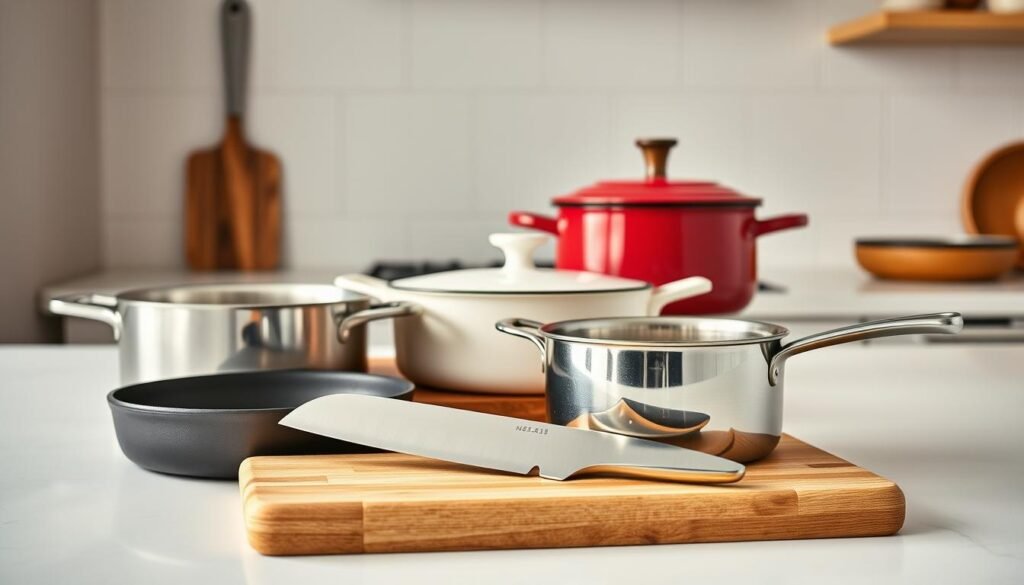
I recommend beginning with non-stick pans in various sizes. A large frying pan handles multiple portions beautifully. Smaller pans work well for eggs or single servings.
Dutch ovens are my favorite multi-purpose pieces. They move from stovetop to oven seamlessly. Their excellent heat retention makes them perfect for slow-cooking meats like chicken.
When selecting these pans, consider materials carefully. Stainless steel offers durability for acidic foods. Cast iron provides superior heat distribution but requires more care.
Choosing Stock Pots and Sauté Pans
Stock pots are essential for batch cooking. They’re perfect for soups or making stock from chicken bones. Choose a size that matches your typical meal portions.
Sauté pans differ from regular skillets with their tall sides. This design prevents splatter when cooking sauces. They’re ideal for one-pan meals and braising.
Invest in heavy-gauge materials for even heating. Thin pans often develop hot spots that can burn your food. Quality pieces ensure consistent results every time.
Must-Have Utensils for Successful Cooking
Your cooking success often depends on the simple tools you reach for most often. These handheld items become extensions of your hands during meal preparation. Choosing the right ones makes every task smoother and more enjoyable.
High-Quality Knives and Cutting Tools
A good chef’s knife transforms cutting from a chore into a pleasure. I recommend starting with just two or three essential blades. A larger chef’s knife handles most tasks, while a smaller one works for detailed cutting.
The Global G2 8-inch model offers professional performance at a reasonable price. For budget options, the Victorinox Fibrox Pro delivers impressive quality under $40. Don’t forget a serrated bread knife for crusty loaves and tomatoes.
Multiple chopping boards keep your food preparation safe. Use separate boards for meats, fish, and vegetables. This simple practice prevents cross-contamination in your cooking space.
Gadgets Like the Garlic Press and Whisk
The garlic press is one of my favorite tools for quick meal prep. It makes light work of garlic that appears in so many recipes. This gadget eliminates tedious mincing by hand.
A silicone-coated whisk protects your pans while blending ingredients smoothly. It’s perfect for scrambled eggs, sauces, and dressings. Kitchen scissors deserve their own spot in your drawer too.
Keep a dedicated pair sharp and use them exclusively for food tasks. They’re perfect for trimming herbs and handling meat. These simple utensils make everyday cooking more efficient.
Bakeware Essentials for Creative Culinary Adventures
Moving from stovetop cooking to oven baking opens up a world of culinary possibilities that require specific tools for success. The right bakeware transforms simple ingredients into impressive creations while ensuring consistent results.
Sheet Pans, Muffin Tins, and Loaf Pans
Sheet pans are absolute workhorses in any space dedicated to baking. I recommend having 2-3 non-stick baking trays in standard size that fit your oven perfectly. They handle everything from roasting vegetables to baking cookies at high temperatures.
Muffin tins offer incredible versatility beyond just muffins and cupcakes. They’re perfect for portion-controlled baking like individual egg frittatas. The non-stick option makes cleanup effortless after preparing your favorite food.
Loaf pans are essential for banana bread and small batch bread recipes. They also work beautifully for pound cakes and meatloaf. Having the right pan size ensures even baking and perfect texture for your creations.
Don’t forget a large mixing bowl for combining flour and ingredients. A cooling rack is crucial for many recipes to prevent soggy bottoms. These essentials make baking significantly more successful and enjoyable.
Developing a Minimalist and Functional Kitchen
Creating an efficient workspace isn’t about having every gadget available, but rather selecting the right equipment for your specific needs. I’ve learned that thinking about tasks before tools is the secret to building a space that truly works for you.
The most essential tools are the ones you actually use regularly. More equipment isn’t always better—sometimes it just creates clutter. Only add new items when what you have clearly isn’t meeting your cooking needs.
I prioritize multi-purpose tools over single-use gadgets whenever possible. A good chef’s knife handles countless food preparation tasks. A sturdy Dutch oven works for both stovetop and oven cooking. This approach saves both space and money.
Storage considerations are crucial in minimalist design. Even the best tool becomes frustrating if it’s difficult to access. I follow the “one in, one out” rule to maintain organization.
A functional minimalist approach doesn’t mean deprivation. It means being intentional about what earns its spot in your workspace. Every item should contribute meaningfully to your cooking success.
This philosophy takes time to develop through honest self-assessment. Pay attention to which tools you reach for daily. Your essential list will reflect your unique food preparation habits.
Optimizing Kitchen Storage and Organization
After years of testing different setups, I’ve discovered that intelligent storage solutions can dramatically improve your daily cooking routine. A well-organized space transforms frustration into smooth workflow.
When everything has its designated spot, you spend less time searching and more time creating delicious meals. This approach makes your cooking area more enjoyable to use every day.
Smart Storage Solutions for Small Spaces
I always recommend thinking vertically first. Wall-mounted magnetic strips for knives and hanging pot racks free up valuable counter space. These solutions keep essential tools accessible without clutter.
Choose items that nest together whenever possible. Stackable bowls and pans that fit inside each other reduce your storage footprint significantly. This approach works wonders in compact areas.
Drawer organizers are absolute game-changers for keeping utensils orderly. They prevent the frustrating jumble where you can never find what you need. I group similar items together for intuitive access.
Strategic placement matters enormously. Keep daily-use tools within arm’s reach of your main workspace. Store special-occasion items in less accessible spots. This system supports efficient cooking flow.
Investing in Premium Kitchen Equipment
Over the years, I’ve developed a clear philosophy about which pieces deserve premium investment. It’s not about buying the most expensive option available. Instead, it’s about strategic choices that pay off through daily use.
When to Splurge on Quality and Durability
I follow a simple rule: invest heavily in what you use every day. For occasional tools, a basic set works fine. This approach saves money while ensuring quality where it matters most.
Consider the “cost per use” calculation. An expensive tool used daily for years costs pennies per use. Cheap equipment that frustrates you actually costs more over time.
My All-Clad cookware set has served me beautifully for many years. The tri-ply construction provides even heating that makes cooking more successful. You’ll never regret this kind of investment.
Similarly, my Global G2 chef’s knife gets daily use. The difference between premium and cheap knives is dramatic. A quality tool like this becomes an extension of your hand.
Lodge cast iron demonstrates that premium doesn’t always mean expensive. These skillets are so durable you’ll never need replacements. They can become family heirlooms passed down through generations.
Build your premium collection gradually. Focus on tools central to your cooking routine first. This selective approach ensures every investment truly enhances your experience.
Budget-Friendly Kitchen Upgrades That Work
I’ve discovered that some of the most reliable tools come with surprisingly affordable price tags. Building a functional space for preparing meals doesn’t require breaking the bank when you know where to find value.
My go-to recommendation is the Victorinox Fibrox Pro chef’s knife. At under $40, it delivers professional performance that transforms your food preparation. This proves that smart shopping can yield excellent quality without premium prices.
For simple tasks like boiling pasta, I actually prefer basic options. A cheap aluminum pan from Walmart for around ten bucks works perfectly. You can toss it in the dishwasher without worrying about damaging expensive cookware.
Plastic cutting boards represent another smart choice. They’re inexpensive, dishwasher-safe, and don’t harbor bacteria like wooden ones can. When they show wear, replacement costs very little.
Budget-friendly doesn’t mean low quality. Many affordable tools from reputable manufacturers perform well and last for years. The key is knowing where quality truly matters versus where adequate performance suffices.
I recommend starting with budget versions of tools you’re unsure about. Upgrade only after confirming through regular use that a particular tool deserves greater investment in your cooking routine.
The Role of Innovative Appliances in Modern Cooking
Modern appliances have truly changed how I approach meal preparation on busy days. They automate tasks that used to require constant attention, making it easier to create healthy, homemade food even with a packed schedule.
The Instant Pot represents a revolutionary approach to pressure cooking. Unlike traditional slow-cookers that can produce bland results, its sauté function lets you develop deep flavors by browning meat and aromatics first. This makes cheap cuts of meat transform into tender, flavorful meals.
Instant Pot, Rice Cooker, and Multi-Use Options
For maximizing grocery budgets, the Instant Pot excels at cooking chicken thighs and pot roasts with moisture. Rice cookers are essential if you prepare rice multiple times weekly. They eliminate the need to monitor water levels, consistently producing perfect grains.
Multi-use options provide tremendous value by replacing several single-purpose tools. Immersion blenders revolutionize soup-making by blending directly in the pot. Food processors handle tedious chopping and can even mix dough for pastries.
The downside is that these appliances require counter space and have learning curves. I recommend choosing based on your actual cooking patterns. If you eat rice daily, a rice cooker could be life-changing for your routine.
Tips for Maintaining and Caring for Your Accessories
The true value of quality tools reveals itself through consistent care and attention over time. I’ve learned that proper maintenance transforms good equipment into lifelong companions. Simple routines ensure your favorite pieces perform beautifully for many years.
Cleaning, Sharpening, and Long-Term Care
Your knife deserves regular attention. I use a ceramic honing rod to realign the blade edge between uses. This quick step saves time and preserves sharpness.
Understanding the difference between honing and sharpening is crucial. Honing maintains alignment while sharpening removes metal. Both are essential for knife longevity.
Hand washing protects your investment. Even though it’s tempting, avoid the dishwasher for quality cookware. Harsh detergents can damage non-stick coatings over time.
Cast iron requires special care. Clean immediately after use and dry thoroughly to prevent rust. Regular seasoning maintains that beautiful non-stick surface.
Cutting boards need prompt cleaning too. Wooden boards should never see dishwasher water. Plastic versions are more forgiving but replace them when deep grooves appear.
Store your knife properly using a magnetic strip or blade guard. Never toss it loose in a drawer where it can damage other tools. Periodic testing ensures everything stays in top condition.
These simple habits protect your investment. They ensure your tools serve you well for many years to come.
Enhancing Your Kitchen with Trendy Accessories
While functionality remains my primary focus, I’ve noticed how the right trendy elements can transform a kitchen’s atmosphere. These pieces inject personality while keeping your space current with modern innovations in food preparation.
The top trend I’ve observed is toward minimalist, multi-functional tools. They save space while looking sleek and modern. This approach appeals to people wanting uncluttered, contemporary spaces.
Popular options include copper cookware for its beautiful appearance. Marble cutting boards double as décor, and matte black utensils create a sophisticated aesthetic. Even colorful Dutch ovens can serve as attractive display pieces.
Smart technology represents another major trend. Digital thermometers and precision scales help home cooks achieve professional results. These tools blend innovation with practical benefits for better food outcomes.
The key thing to remember is that trendy accessories should still serve a genuine purpose. Buying something just because it’s fashionable often leads to regret. I recommend incorporating trendy elements selectively rather than overhauling your entire setup.
Some trendy items prove genuinely innovative and become staples. Others are passing fads. I suggest waiting to see which trends have staying power before making significant investments in your cooking space.
Culinary Inspiration and Future Trends
Staying current with emerging kitchen technology opens up exciting possibilities for creative food preparation. I find that new tools often spark fresh ideas for meals I might not have attempted otherwise.
Emerging Gadgets and Tools for the Modern Cook
Multi-functional appliances are becoming increasingly popular. A high-powered blender that can both blend and heat soup simplifies multiple cooking tasks in one device.
Smart technology helps people achieve consistent results. These tools take the guesswork out of complex food preparation. They’re perfect for those learning new techniques.
I’ve been testing several innovative gadgets recently. Sous vide precision cookers deliver restaurant-quality results at home. Air fryer combinations handle multiple cooking methods efficiently.
Sustainability is a top consideration in modern tool design. Manufacturers are creating durable products with eco-friendly materials. This approach benefits both people and the planet.
Time-saving gadgets make everyday cooking more enjoyable. They handle tedious tasks like vegetable spiralizing effortlessly. This encourages more home-cooked meals.
Careful testing helps distinguish useful innovations from gimmicks. I recommend researching thoroughly before investing in new tools. Focus on gadgets that address your specific cooking needs.
Conclusion
The relationship between a cook and their tools evolves with every meal prepared and every recipe attempted. My years of testing equipment have shown me that the right selection makes all the difference in daily cooking.
The most important thing I’ve learned is that your space should reflect your actual needs. Don’t feel pressured to own every item on a generic list. Focus on what supports your regular tasks and brings joy to food preparation.
Start with versatile basics like a good knife and essential pans. Build your collection gradually based on clear needs. Your cooking journey will continue to grow over time.
I hope this resource helps you create a functional area that makes preparing meals more enjoyable. The right equipment should feel like an extension of your skills, not a burden.